SALT part of urgent global observation campaign for a new supernova

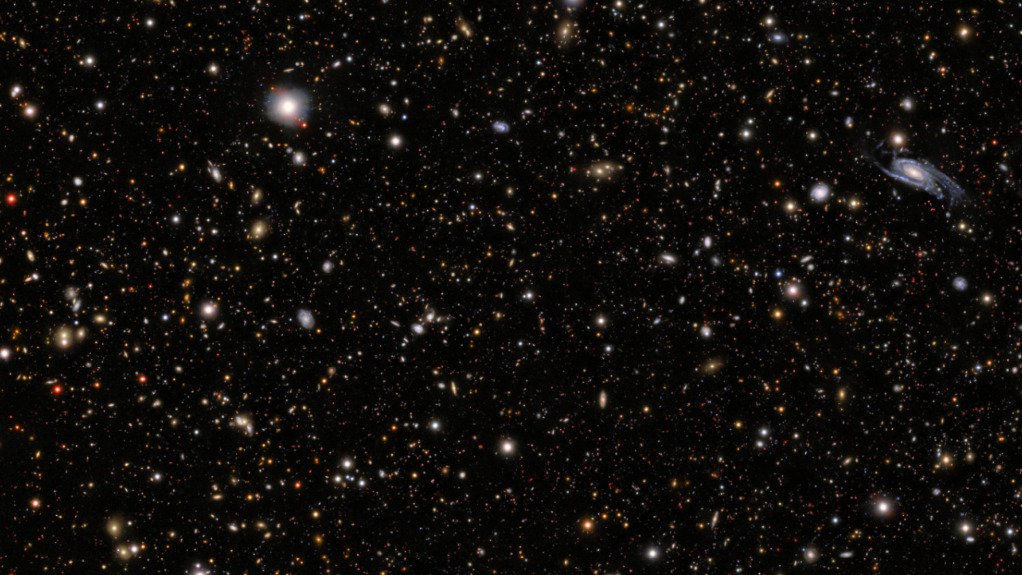


The Karoo-based Southern African Large Telescope (SALT) has played a significant role in an urgent international collaboration to monitor a rarely observed phenomenon: the actual start and development of a supernova explosion.
It started in March, when the Chinese-European Einstein Probe X-ray space telescope detected a brief flash of soft (lower energy) X-rays, from a galaxy some 500-million light-years distant (this flash was designated EP260321a). A global monitoring campaign was immediately implemented – ground-based telescopes started their observations of EP260321a within an hour of its discovery. These established that the phenomenon was a supernova, subsequently designated SN 2026gzf, that was brightening rapidly.
Two separate teams, both led by US scientists, independently determined that the original flash had been what was called a shock breakout, which was the moment that the shock wave from the star’s explosion erupted through its surface and released the first light of the supernova. This happens with all supernovas but is incredibly rarely seen; the EP260321a event is only the second time that a shock breakout has been definitely observed.
The two teams also established that SN 2026gzf was a broad-lined Type Ic (Ic-BL) supernova. Such supernovae typically produce jets of material with speeds close to that of light (“relativistic” speeds) and are usually associated with gamma-ray bursts (GRBs), which are the most powerful and brightest explosions in the universe. But SN 2026gzf did not have relativistic jets, nor was there an associated GRB. A further oddity was that SN 2026gzf’s shock breakout was the faintest ever for a Ic-BL supernova (although the supernova explosion itself was not likewise weak).
“SN 2026gzf looks remarkably similar to other energetic supernovae that have been previously linked to [GRBs],” noted Carnegie Mellon University McWilliams Fellow and astronomer Brendan O’Connor, head of one of the two teams observing the supernova. “Yet multi-wavelength follow-up observations using the most sensitive facilities found no evidence for a relativistic jet or an afterglow, which are typically seen in those events. One possibility is that the jet was ‘choked’, either by the surface of the star or by circumstellar material surrounding the star.”
SALT’s contribution to this supernova observation campaign was to collect eight spectra of SN 2026gzf over a period of almost two months. Other observations were made by optical, radio, and X-ray telescopes in Germany, Chile, the US and in space.
“Our observations allowed us to study the physics of three pieces of this explosion: the X-ray shock breakout, the accompanying supernova, and the interaction of the supernova with material previously cast out by the dying star,” reported University of Maryland College Park NASA Einstein Fellow Jillian Rastinejad, head of the other team. “With this information we were able to map out the structure of the material surrounding the star and understand the star’s violent lifestyle before it collapsed.”
Article Enquiry
Email Article
Save Article
Feedback
To advertise email advertising@creamermedia.co.za or click here
Projects

Latest Multimedia

Latest News

Showroom

Sika South Africa is a trusted partner for the nation’s infrastructure, commercial, residential, and industrial sectors.
VISIT SHOWROOM
The Aluminium Federation of South Africa (AFSA), is the voice of the South African aluminium industry.
VISIT SHOWROOM


Press Office
Announcements
What's On
Subscribe to improve your user experience...
Option 1 (equivalent of R125 a month):
Receive a weekly copy of Creamer Media's Engineering News & Mining Weekly magazine
(print copy for those in South Africa and e-magazine for those outside of South Africa)
Receive daily email newsletters
Access to full search results
Access archive of magazine back copies
Access to Projects in Progress
Access to ONE Research Report of your choice in PDF format
Option 2 (equivalent of R375 a month):
All benefits from Option 1
PLUS
Access to Creamer Media's Research Channel Africa for ALL Research Reports, in PDF format, on various industrial and mining sectors
including Electricity; Water; Energy Transition; Hydrogen; Roads, Rail and Ports; Coal; Gold; Platinum; Battery Metals; etc.
Already a subscriber?
Forgotten your password?
Receive weekly copy of Creamer Media's Engineering News & Mining Weekly magazine (print copy for those in South Africa and e-magazine for those outside of South Africa)
➕
Recieve daily email newsletters
➕
Access to full search results
➕
Access archive of magazine back copies
➕
Access to Projects in Progress
➕
Access to ONE Research Report of your choice in PDF format
RESEARCH CHANNEL AFRICA
R4500 (equivalent of R375 a month)
SUBSCRIBEAll benefits from Option 1
➕
Access to Creamer Media's Research Channel Africa for ALL Research Reports on various industrial and mining sectors, in PDF format, including on:
Electricity
➕
Water
➕
Energy Transition
➕
Hydrogen
➕
Roads, Rail and Ports
➕
Coal
➕
Gold
➕
Platinum
➕
Battery Metals
➕
etc.
Receive all benefits from Option 1 or Option 2 delivered to numerous people at your company
➕
Multiple User names and Passwords for simultaneous log-ins
➕
Intranet integration access to all in your organisation